things-to-do
Senate Square and Helsinki Cathedral: The City's Neoclassical Heart
The white steps of Helsinki Cathedral above Senate Square form the city's most photographed view. Here is the story behind it.
Listen in English · 3 min
How we reported this
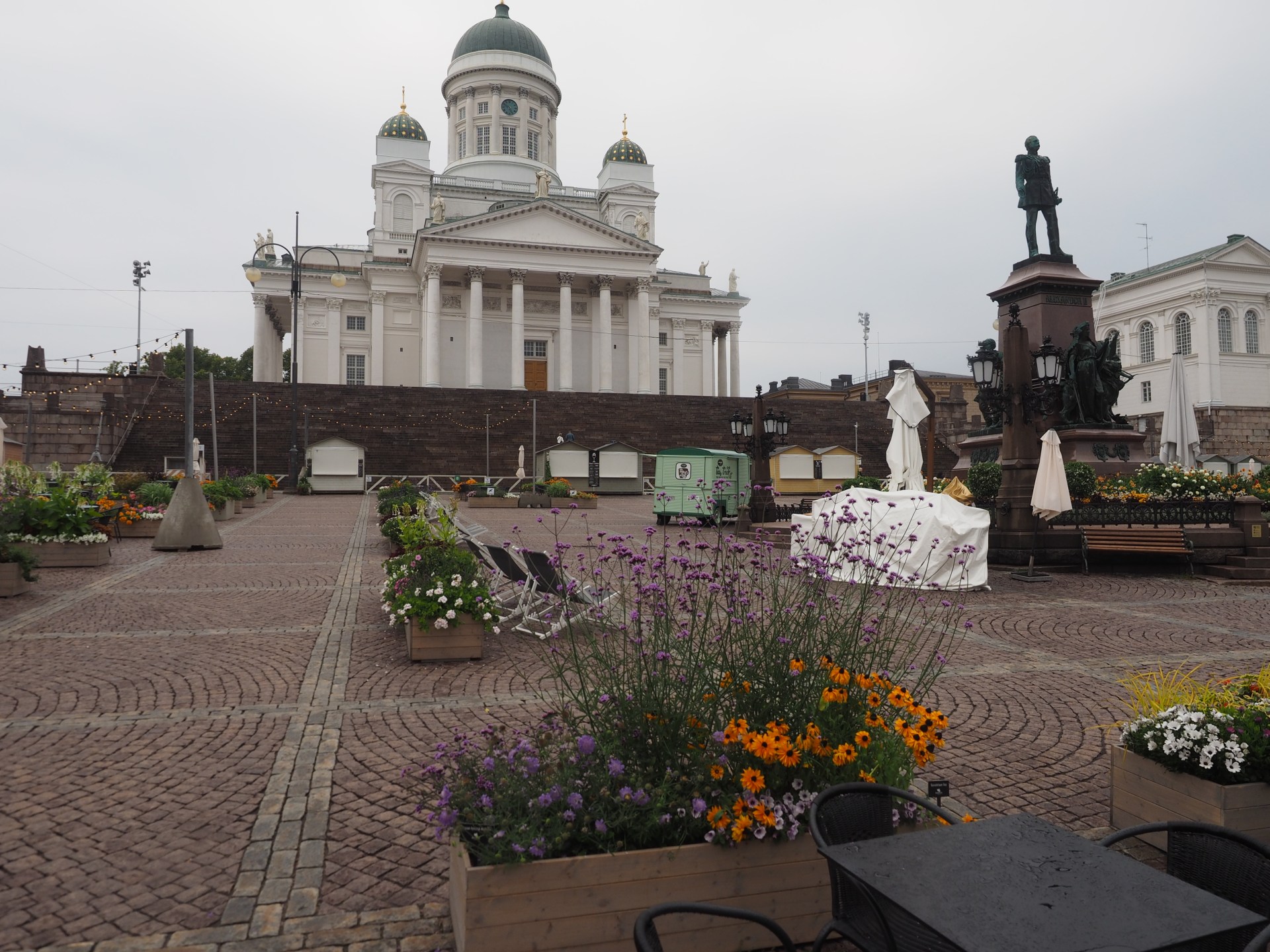
If Helsinki has a single postcard image, it is the gleaming white Helsinki Cathedral rising above the broad steps of Senate Square. The ensemble is the ceremonial heart of the city and one of the finest examples of neoclassical planning in northern Europe, drawing visitors and locals to its steps in every season.
The square and its surrounding buildings were laid out in the early nineteenth century after Helsinki became the capital of the Grand Duchy of Finland under Russian rule, when the city was rebuilt on a grand scale. Much of the design is the work of the architect Carl Ludvig Engel, whose unified vision gives the square its harmony. The cathedral itself, completed in 1852, crowns the composition with its green dome and pale facade.
Around the square stand the other pillars of the design: the Government Palace on one side, the main building of the University of Helsinki opposite, and the National Library nearby, with a statue of Emperor Alexander II at the centre. Together they were intended to express the institutions of church, state and learning, and the arrangement still reads clearly today.
Entry to the cathedral is generally free, though visitors are asked to be respectful, as it remains an active place of worship and a venue for concerts. The long flight of steps is a popular gathering and resting spot, especially on sunny days, and offers a fine vantage point over the square and toward the harbour beyond.
The square is only a short walk from Market Square and the harbour ferries, making it easy to combine with a wider stroll through the centre. Just below the cathedral, the streets are lined with cafes and shops, and the nearby Uspenski Cathedral, an Orthodox church on a hill to the east, offers a striking architectural contrast within a few minutes' walk.
Throughout the year the square doubles as a stage for city life, hosting seasonal markets, concerts and public celebrations, and in winter it often becomes the setting for a Christmas market and festive lights that draw families. The pale colours of the buildings, chosen to work with the northern light, take on different characters through the seasons and the long summer evenings. For photographers, early morning and late evening offer the calmest conditions before the steps fill with visitors.