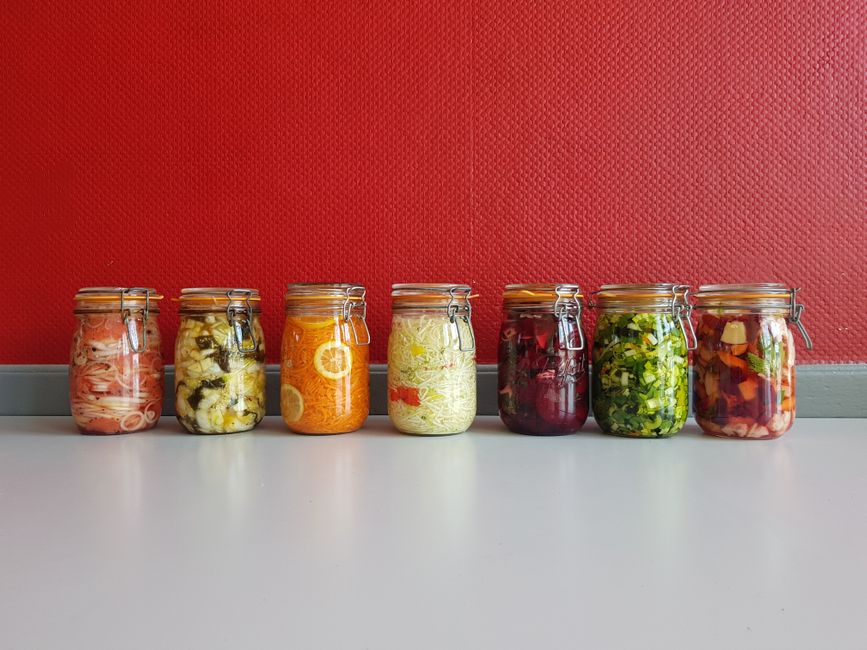
Sales of fermented foods at Hakaniemi Market Hall have climbed roughly 30 percent over the past two years, according to vendors there, tracking a pattern visible across Helsinki's food retail sector. Sauerkraut, kefir, kimchi and traditional Finnish hapatettu kaura — fermented oat products — are moving off shelves at a pace that would have surprised anyone shopping there in 2022. Gut health has gone from niche nutritional theory to mainstream grocery habit.
The timing is not accidental. A wave of European research published between 2023 and 2025, including a major collaborative study from the University of Helsinki's Faculty of Medicine, has strengthened the case that a diverse gut microbiome is linked to reduced inflammation, better mood regulation and improved immune response. Consumers are reading the headlines. Dietitians at Mehiläinen's Kamppi clinic say gut health inquiries now account for a significant share of their general nutrition consultations — a shift they describe as recent and rapid.
What Helsinki's shelves actually offer
The practical question is where to start. Hakaniemi Market Hall, on the north side of the hall's ground floor, carries at least four varieties of locally produced sauerkraut, including a rye-and-caraway version made by a small producer from Espoo. Prices run from around €3.50 for a 400-gram jar to just over €6 for a litre of unpasteurised brine-packed cabbage — the unpasteurised distinction matters, because heat treatment kills the live Lactobacillus cultures that drive the health benefit.
Ruohonjuuri, the organic food chain with its flagship store on Mannerheimintie in central Helsinki, stocks a wider fermented range: water kefir, dairy kefir from Järvi-Suomen Portti, several varieties of kombucha brewed domestically, and a rotating selection of fermented nut-based spreads. Staff there are trained to explain CFU counts — colony-forming units, the standard measure of live bacteria — to customers who ask. A 330ml bottle of domestic kombucha typically retails for €3.80 to €5.20 depending on brand.
Traditional Finnish cuisine gives locals a head start many don't recognise. Hapankaali — sour cabbage, the Finnish near-equivalent of sauerkraut — has been eaten through Baltic winters for centuries. Piimä, a cultured buttermilk product, remains standard in most Finnish supermarkets and costs under €2 for a litre at K-Market and S-Market chains across the city. Piimä contains live cultures and pairs well with rye bread, which itself undergoes a lactic acid fermentation during production at traditional bakeries including Fazer's Lahti facility, whose products are sold widely in Helsinki.
How to build a fermented-food habit that sticks
Variety matters more than volume. Research from the Karolinska Institute published in early 2025 found that consuming five or more distinct fermented food types per week was associated with significantly greater microbiome diversity than eating large amounts of a single product. That means rotating between piimä, hapatettu kaura porridge, a small daily portion of sauerkraut and occasional kefir is likely more effective than drinking a large kombucha every morning and stopping there.
The Kallio neighbourhood has developed something of a micro-cluster for fermented food enthusiasts. The weekend farmers' market near Sörnäinen metro station regularly features two or three small producers selling raw fermented vegetables, and a Kallio-based community kitchen called Yhteinen Keittiö runs occasional fermentation workshops — the next scheduled session is in August 2026, with registration opening through their website. Entry costs €25 and participants leave with a half-kilogram jar of their own product.
A word of caution worth including: people with compromised immune systems, those recovering from serious illness, or anyone on immunosuppressive medication should speak with a physician before dramatically increasing fermented food intake. Live bacterial cultures are generally safe for healthy adults, but individual circumstances vary. Mehiläinen, Terveystalo and the city's own Helsinki Health Centre network at Haartmaninkatu all offer dietitian referrals if you want a personalised starting point rather than a supermarket aisle.
Start small. A tablespoon of sauerkraut alongside lunch, a glass of piimä at breakfast. Give it four weeks before judging results. The Hakaniemi vendors will still be there.